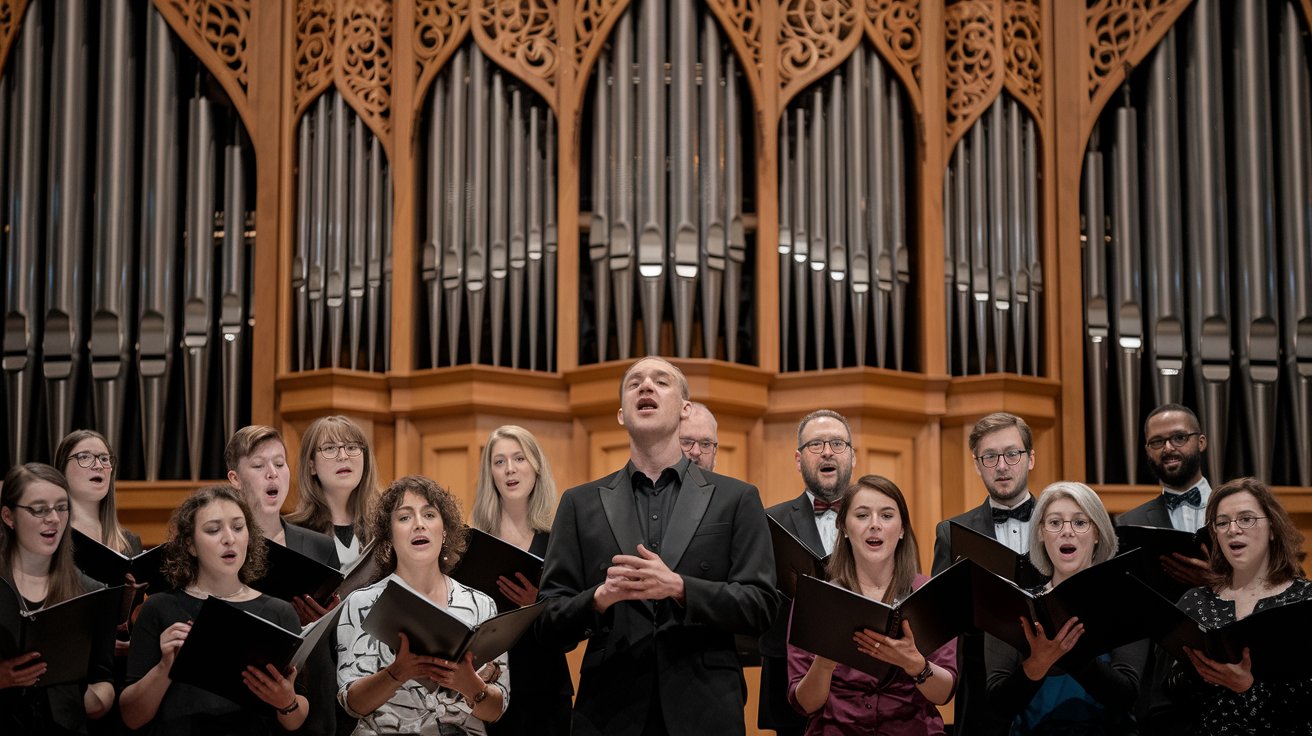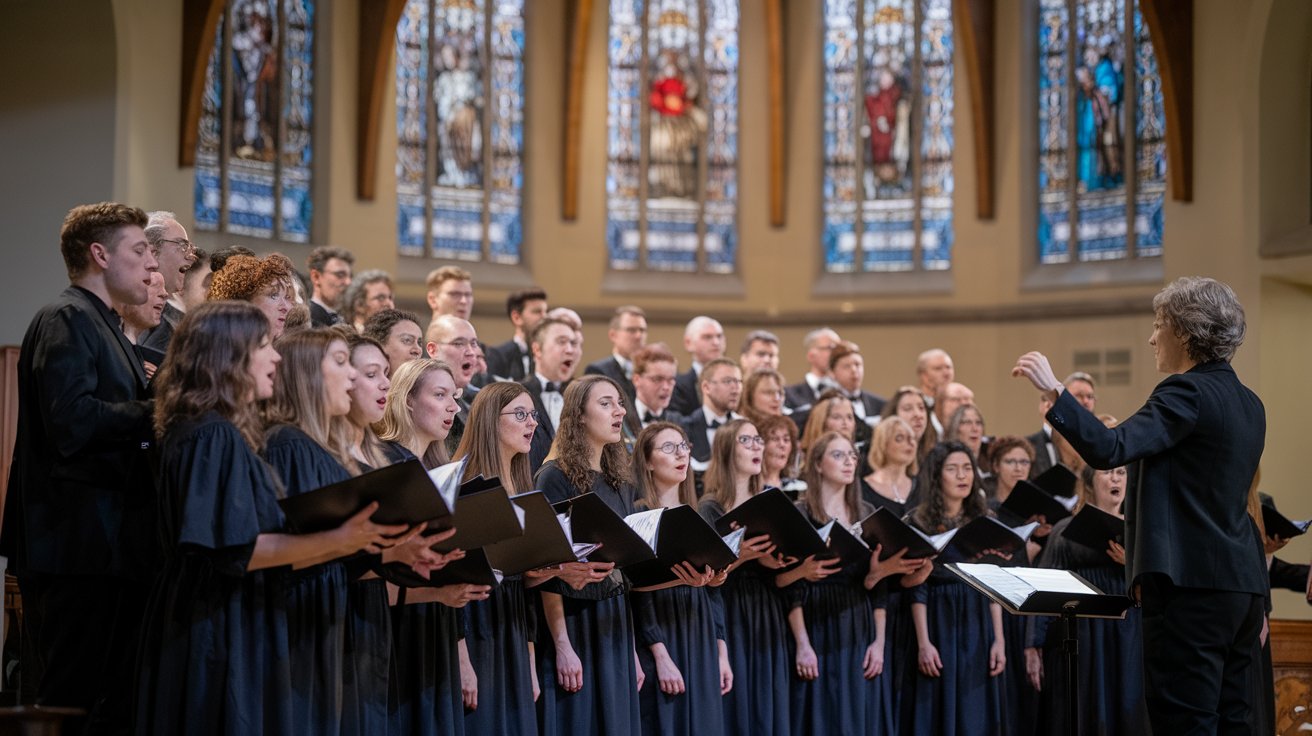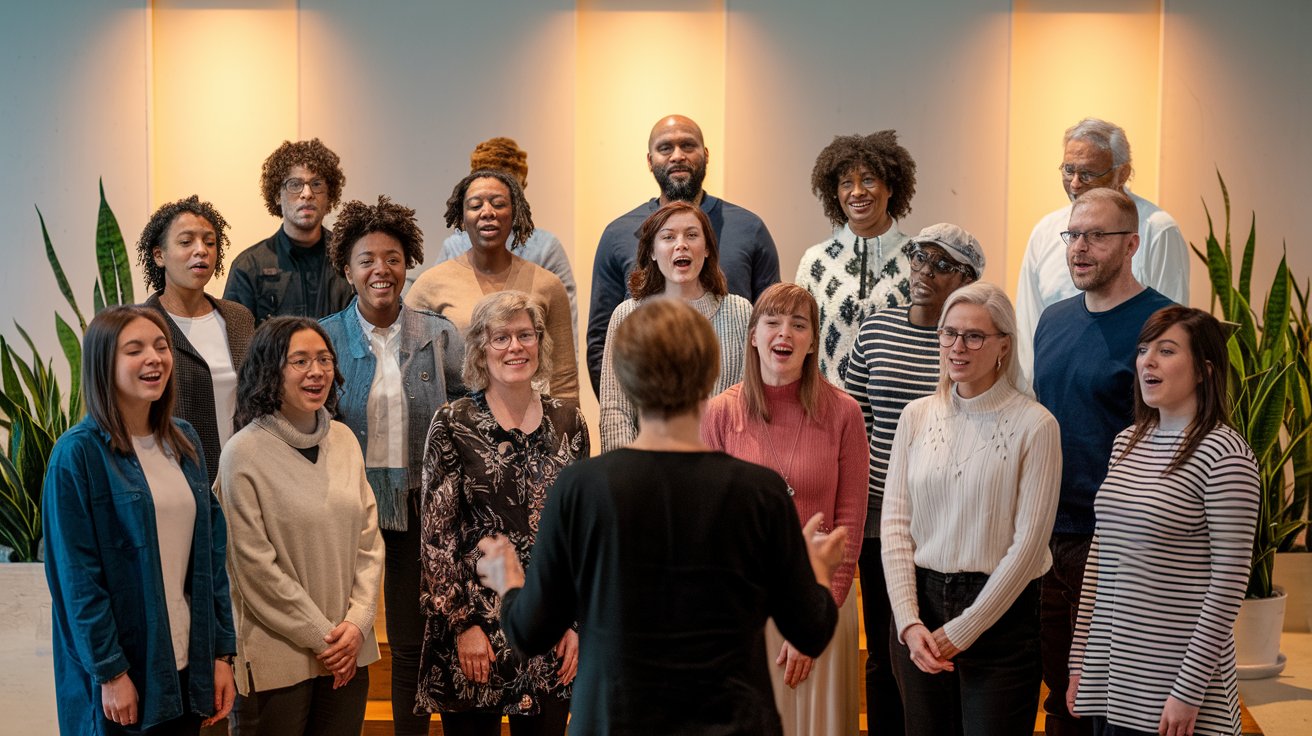
A choir is an organized group of singers who perform together, typically divided into distinct vocal sections such as soprano, alto, tenor, and bass. In 2026, over 42 million Americans participate in choir groups across schools, churches, community centers, and professional venues. This comprehensive guide explains what classifies a choir, explores the various types of choral ensembles, and reveals the purpose behind these musical groups in modern society.
What Classifies a Choir: Essential Characteristics
A choir is classified by several defining characteristics that distinguish it from other singing groups. The primary classification requires multiple singers performing together with organized vocal parts, typically ranging from 12 to over 100 members. In the United States during 2026, the National Association for Music Education recognizes that a proper choir must include at least three distinct vocal sections working in harmony. The ensemble performs under the direction of a conductor who coordinates timing, dynamics, and musical interpretation.
What separates a choir from casual singing groups is the formal structure and commitment to rehearsed repertoire. Professional and community choirs in 2026 typically rehearse 2-4 hours weekly, while school choirs average 45-90 minutes of daily practice. The musical classification also depends on the ability to perform complex arrangements with multiple vocal lines simultaneously. According to the American Choral Directors Association, approximately 28,000 organized choirs operate across the United States in 2026, serving various communities and musical traditions.
The 4 Primary Types of Choirs in 2026
Understanding the different types of choirs helps identify which ensemble suits specific musical preferences and skill levels. Each choir type serves distinct purposes and appeals to different audiences throughout the United States.
Church Choirs and Sacred Music Groups
A church choir remains the most common type of choral ensemble in America, with over 300,000 active religious choirs operating in 2026. These groups primarily perform sacred music including hymns, anthems, and liturgical pieces during worship services. The typical church choir ranges from 15-40 members and often includes volunteer community members alongside paid section leaders. Many churches now offer multiple choir options including contemporary worship ensembles, gospel choirs, and traditional chancel choirs. Research from the Religious Music Association indicates that 67% of American congregations maintain at least one active choir program in 2026.
School and Youth Choirs
Educational choir programs serve approximately 5.2 million students across elementary, middle, and high schools in the United States during 2026. School choirs teach fundamental music theory, vocal technique, and ensemble performance skills. These youth choirs often compete in regional and national festivals, with top ensembles achieving remarkable artistic standards. The curriculum typically includes diverse repertoire from classical to contemporary styles. Many school districts now recognize choir participation as fulfilling arts graduation requirements, contributing to sustained enrollment. Honor choirs and all-state ensembles provide advanced opportunities for exceptional student singers to collaborate with peers statewide.
Community and Volunteer Choirs
Community choirs offer recreational singing opportunities for adults of all skill levels, with over 18,000 active groups operating in American cities during 2026. These ensembles typically welcome members without auditions, focusing on enjoyment and community building alongside musical development. The community choir repertoire spans classical masterworks, folk songs, pop arrangements, and multicultural music. Most groups charge modest membership fees ranging from $50-$200 annually to cover music, venues, and accompanist costs. According to Chorus America, community choir participation increased 23% between 2020 and 2026, reflecting growing interest in accessible group singing experiences.
Professional and Chamber Choirs
Professional choirs consist of auditioned, paid vocalists who perform at the highest artistic levels. Chamber choirs typically include 12-40 elite singers specializing in complex repertoire requiring exceptional musicianship. The United States supports approximately 450 professional choral organizations in 2026, including renowned groups like the San Francisco Symphony Chorus and the Philadelphia Singers. These professional ensembles often collaborate with symphony orchestras, opera companies, and recording studios. Salaries for professional choir members range from $25,000-$85,000 annually depending on the organization’s budget and performance schedule. Many professional choirs also maintain educational outreach programs serving schools and underserved communities.
Why Is It Called Choir: Etymology and Historical Context
The word choir derives from the Latin term ‘chorus,’ which originated from the ancient Greek ‘khoros’ meaning a group of dancers and singers who performed in theatrical productions. The term evolved through Old French as ‘cuer’ before entering Middle English as ‘quire’ in the 13th century. The modern spelling choir became standardized in the 17th century, distinguishing the musical ensemble from ‘quire,’ which referred to sheets of paper. The pronunciation remains consistent with ‘quire’ sounding like ‘kwire,’ which sometimes confuses new English learners in 2026.
Historically, the choir designation specifically referred to the architectural section of churches where singers performed during medieval religious services. This spatial connection between location and function caused the term to transfer permanently to the singing group itself. In American English usage throughout 2026, choir predominantly describes organized vocal ensembles, while British English sometimes uses ‘chorus’ interchangeably. The term has expanded beyond religious contexts to encompass all structured singing groups including secular, educational, and professional ensembles across diverse musical traditions.
What Is the Purpose of a Choir in Music and Society
The purpose of a choir extends far beyond simple musical performance, serving crucial educational, cultural, and social functions in American communities during 2026. Research from the National Endowment for the Arts demonstrates that choral singing significantly improves mental health, reduces stress, and creates meaningful social connections among participants. Choirs preserve cultural heritage by performing traditional music from various ethnic and historical backgrounds, ensuring these artistic treasures reach new generations. Educational choirs teach discipline, teamwork, and artistic excellence while building confident young musicians.
From a musical perspective, choirs create harmonic richness impossible for solo vocalists to achieve, producing complex textures through multiple vocal lines. The ensemble format allows composers to explore sophisticated arrangements utilizing four or more distinct vocal parts simultaneously. In religious settings, church choirs enhance worship experiences and lead congregational singing. Professional choirs collaborate with orchestras to perform major works like Beethoven’s Ninth Symphony and Handel’s Messiah, pieces requiring substantial choral forces. Studies from the American Psychological Association in 2026 reveal that regular choir participation correlates with improved respiratory health, enhanced cognitive function, and increased life satisfaction among members of all ages.
Difference Between a Choir and Other Singing Groups
Understanding the difference between a choir and other singing groups clarifies terminology and helps identify appropriate musical opportunities. A choir specifically refers to an organized ensemble with formal structure, designated vocal sections, and regular rehearsal schedules. In contrast, casual singing groups may gather informally without assigned parts or conductor guidance. The distinction involves commitment level, musical complexity, and performance expectations that characterize genuine choral organizations.
An a cappella group typically includes 4-20 singers performing without instrumental accompaniment, often featuring soloists and vocal percussion, whereas traditional choirs usually include 20-100+ members with piano or orchestral accompaniment. Vocal jazz ensembles focus on specific jazz repertoire with improvisation, while choirs perform diverse classical, sacred, and contemporary arrangements. Barbershop quartets consist of exactly four singers in close harmony, whereas choirs require multiple singers per vocal section. According to the American Choral Directors Association in 2026, a true choir maintains consistent membership, follows structured rehearsal protocols, and performs publicly at least twice annually, distinguishing it from informal singing gatherings.
How Choir Work Functions: Roles and Structure
Understanding how choir work operates reveals the organizational complexity behind successful choral performances. The conductor serves as artistic director, selecting repertoire, leading rehearsals, and shaping musical interpretation. Section leaders assist by teaching vocal parts, providing guidance to less experienced singers, and serving as musical models. The accompanist, typically a skilled pianist or organist, supports rehearsals and performances while sometimes arranging music for the choir group.
Administrative choir work includes librarians who organize music distribution and collection, business managers handling finances and concert logistics, and publicity coordinators promoting performances. In 2026, many American choirs employ technology coordinators managing digital music libraries, video recording, and online ticket sales. The typical rehearsal structure includes vocal warm-ups (10-15 minutes), sectional work on challenging passages (20-30 minutes), and full ensemble rehearsal refining interpretation and balance (45-60 minutes). Professional choirs may hire vocal coaches providing individual technical instruction, while volunteer ensembles rely on peer learning and conductor guidance. Large choral organizations often maintain boards of directors overseeing strategic planning, fundraising, and community engagement initiatives that sustain the choir’s long-term viability.
Choir Group Meaning and Musical Terminology
The choir group meaning encompasses both the collective ensemble and the specific subdivisions within the organization. In musical terminology, ‘choir’ can refer to the entire singing body or to individual vocal sections like the soprano choir or bass choir. Professional orchestral scores often designate separate choral sections for specific passages, with composers writing ‘soprano choir’ or ‘full choir’ to indicate which singers perform particular measures. The term choir group gained popularity in 2026 as a more accessible, less formal designation appealing to contemporary audiences unfamiliar with classical terminology.
Within larger choral organizations, multiple choir groups may exist serving different skill levels or age ranges. For example, a community music program might offer beginner choir, intermediate ensemble, and advanced chamber choir options. The meaning of choir in educational contexts extends beyond the singers themselves to encompass the entire program including theory classes, vocal instruction, and performance opportunities. Church music programs frequently maintain multiple choirs including children’s choir, youth ensemble, adult choir, and handbell choir, each serving distinct worship and outreach functions. Understanding this terminology helps participants identify appropriate ensembles matching their experience level and musical interests throughout their choral journey.
Choir Pronunciation Guide for American English
The correct choir pronunciation in American English sounds like ‘kwire,’ rhyming with ‘fire’ and ‘wire.’ This pronunciation often confuses newcomers to choral music because the spelling suggests it should sound like ‘choy-er’ or ‘chore.’ The silent ‘ch’ results from the word’s French origin, where similar spelling patterns produce different sounds than expected in English. In 2026, language learning applications consistently rank choir pronunciation among the top 100 commonly mispronounced words by non-native English speakers in the United States.
Regional variations exist across America, though the standard ‘kwire’ pronunciation dominates professional musical settings nationwide. Some dialects may slightly vary the vowel sound, producing something closer to ‘kwahr’ in certain Southern regions. Music educators emphasize correct pronunciation because clear communication about choir activities prevents misunderstandings in educational and community settings. The related term ‘choral,’ referring to choir-related activities, is pronounced ‘kor-ul’ with the emphasis on the first syllable. Understanding these pronunciation patterns helps new singers confidently discuss their choir participation and navigate musical conversations with proper terminology throughout their involvement in American choral music.
What Is a Choir for Kids: Youth Choir Programs Explained
A choir for kids provides age-appropriate singing experiences that develop musical skills, confidence, and social connections among young participants. Children’s choirs typically serve ages 5-18, divided into groups based on vocal development stages and experience levels. Elementary programs focus on basic music literacy, proper breathing technique, and simple two-part harmony. Middle school youth choirs introduce more complex three-part arrangements and music theory concepts. High school ensembles perform advanced repertoire including four-part harmony and occasionally five or six vocal parts in sophisticated arrangements.
In 2026, approximately 8,500 dedicated youth choir programs operate independently from schools across the United States, offering intensive training beyond regular classroom music education. Organizations like the American Boychoir School tradition and the Young People’s Chorus of New York City provide elite training for exceptionally talented young singers. Research from the National Association for Music Education demonstrates that kids participating in choir programs score 22% higher on standardized reading tests compared to non-participants. Youth choirs perform diverse repertoire including classical pieces, folk songs from various cultures, contemporary compositions, and popular music arrangements. Many programs maintain touring schedules, with top ensembles traveling internationally to festivals and exchange programs. The benefits extend beyond music, teaching responsibility, time management, and collaborative skills essential for future success in any career path.
Using Choir in a Sentence: Practical Examples
Learning to use choir in a sentence properly helps when discussing musical activities and choral experiences. Here are multiple contextual examples demonstrating correct usage: ‘Sarah joined the community choir to pursue her passion for singing after retiring from teaching.’ This sentence shows choir as the object of a verb, indicating membership in the organization. Another example: ‘The church choir performed a moving rendition of Handel’s Hallelujah Chorus during the Easter service.’ This demonstrates possessive usage with a specific performance description.
Additional sentence examples include: ‘Local schools require students to choose between band, orchestra, or choir for their music credit.’ This shows choir as one option among alternatives. Descriptive usage appears in sentences like: ‘The award-winning youth choir impressed judges with their precise harmonies and emotional expression.’ Professional context: ‘After graduating with a vocal performance degree, Michael auditioned for the professional chamber choir in Boston.’ Informal usage: ‘My neighbor sings in a choir that rehearses every Tuesday evening at the community center.’ These examples demonstrate that choir functions as a noun describing the musical group, appearing in various grammatical positions throughout sentences. Understanding proper usage enables clear communication about choral activities in both casual conversation and formal writing throughout 2026.
Related video about what is a choir
This video complements the article information with a practical visual demonstration.
Most asked questions about what is a choir
What classifies a choir versus a singing group?
A choir is classified by formal organization, multiple vocal sections (typically soprano, alto, tenor, bass), regular rehearsal schedules, and conductor-led performances. Singing groups may be informal gatherings without assigned parts or structured preparation. Choirs require at least 12 members divided into distinct vocal sections, maintain consistent membership, and perform publicly at least twice annually. In 2026, the American Choral Directors Association recognizes approximately 28,000 organized choirs across the United States that meet these specific classification criteria, distinguishing them from casual singing groups.
Why is it called choir instead of chorus?
The term choir originates from Latin ‘chorus’ and Greek ‘khoros,’ evolving through Old French as ‘cuer’ before becoming ‘quire’ in Middle English and finally ‘choir’ in the 17th century. The name originally referred to the architectural section of churches where singers performed during medieval services. This spatial connection transferred permanently to the singing group itself. In American English during 2026, ‘choir’ specifically describes organized vocal ensembles, while ‘chorus’ may refer to theatrical singers or the repeated section of a song, though the terms occasionally overlap in usage.
What is the main purpose of a choir?
The purpose of a choir encompasses multiple functions including creating complex harmonic music impossible for solo singers, preserving cultural heritage through traditional repertoire, enhancing religious worship experiences, and providing educational opportunities for musical development. Research from the National Endowment for the Arts in 2026 demonstrates that choir participation significantly improves mental health, reduces stress, and creates meaningful social connections. Choirs serve over 42 million Americans annually, teaching discipline, teamwork, and artistic excellence while performing music ranging from classical masterworks to contemporary arrangements in diverse community and professional settings.
What is the difference between a choir and an a cappella group?
A choir typically includes 20-100+ members organized into formal vocal sections, performs with piano or orchestral accompaniment, and focuses on diverse classical and sacred repertoire. An a cappella group usually consists of 4-20 singers performing exclusively without instrumental accompaniment, often featuring soloists, vocal percussion, and contemporary arrangements. A cappella groups frequently emphasize individual vocal abilities and improvisation, while choirs prioritize blended ensemble sound and conductor interpretation. In 2026, both formats thrive in American music culture, serving different artistic purposes and appealing to distinct audiences with specialized musical approaches and performance traditions.
How does choir work benefit children’s development?
Choir work benefits children through improved academic performance, enhanced social skills, and increased confidence. Research from the National Association for Music Education in 2026 shows that kids participating in choir programs score 22% higher on standardized reading tests compared to non-participants. Youth choirs teach music literacy, proper vocal technique, and collaborative teamwork while developing discipline and time management skills. Approximately 5.2 million American students participate in school choir programs during 2026, experiencing cognitive benefits including enhanced memory, improved language processing, and stronger pattern recognition abilities that transfer to academic subjects and future career success.
What are the 4 main types of choirs in America?
The 4 primary types of choirs in America include church choirs (over 300,000 groups performing sacred music during worship), school and youth choirs (serving 5.2 million students in educational settings), community and volunteer choirs (18,000+ groups offering recreational singing for adults), and professional chamber choirs (450 auditioned organizations paying members for elite performances). Each type serves distinct purposes: religious choirs enhance worship, school choirs provide music education, community choirs build social connections, and professional ensembles achieve highest artistic standards. In 2026, these diverse choir categories collectively engage over 42 million Americans in organized choral singing across the United States.
| Choir Type | Key Characteristics | Primary Benefits |
|---|---|---|
| Church Choir | 15-40 members, sacred repertoire, volunteer-based with paid section leaders | Enhances worship, builds faith community, preserves religious musical traditions |
| School Choir | Serves 5.2 million students, diverse repertoire, educational focus | Teaches music theory, improves academic performance by 22%, builds confidence |
| Community Choir | 18,000+ groups nationwide, open membership, $50-$200 annual fees | Reduces stress, creates social connections, accessible to all skill levels |
| Professional Choir | 12-40 elite singers, $25,000-$85,000 salaries, highest artistic standards | Performs complex masterworks, collaborates with orchestras, advances choral art |
| Youth Choir | Ages 5-18, 8,500 dedicated programs, intensive training | Develops musical skills, teaches teamwork, provides touring opportunities |