Understanding the difference between chorus and choir is essential for musicians, educators, and music enthusiasts across the United States. While these terms are often used interchangeably, they carry distinct meanings in various contexts. A choir typically refers to organized vocal ensembles in religious or formal settings, while a chorus often describes theatrical singing groups or repeating sections in songs. This comprehensive guide clarifies when to use each term correctly and explores their unique characteristics in American musical culture.
What is a Choir? Understanding the Basics
A choir is an organized group of singers who perform together under the direction of a conductor or choirmaster. In the United States, choirs are predominantly associated with religious institutions, classical music venues, and formal concert settings. The term originates from the Latin word chorus, but has evolved to represent specific types of vocal ensembles. As of 2026, approximately 42.6 million Americans participate in choir activities through churches, schools, and community organizations, making it one of the most popular group musical activities in the country.
Choirs are characterized by their structured organization, with singers divided into specific vocal sections including soprano, alto, tenor, and bass. Professional and semi-professional choirs maintain rigorous rehearsal schedules and typically perform classical repertoire, sacred music, or sophisticated choral arrangements. The choir pronunciation in American English emphasizes the “kw” sound at the beginning, distinguishing it from other musical terms. Educational institutions across the United States employ over 58,000 choir directors who specialize in developing vocal technique and ensemble cohesion among student singers.
Different Types of Choirs in American Music
The American choral landscape features diverse types of choirs serving different musical and community purposes. Understanding these variations helps clarify the specific contexts where the term choir is most appropriately used. Each type maintains distinct characteristics in membership, repertoire, and performance settings throughout the United States in 2026.
Chamber Choirs and Church Choirs
Chamber choirs consist of 12 to 28 elite singers who perform intricate vocal works requiring precision and blend. These small ensembles dominate the professional choral scene in major American cities, with notable groups in New York, Boston, and Los Angeles. In contrast, church choirs remain the most common type across the United States, with over 300,000 congregational choirs active in 2026. Church choirs serve liturgical functions, singing hymns, anthems, and sacred music during worship services. The difference between chorus and choir in church settings is particularly significant, as traditional denominations consistently use “choir” for their organized singing groups.
Mixed Choirs and Community Choirs
Mixed choirs include both male and female voices across all vocal ranges, creating full harmonic textures. These ensembles represent the standard configuration for most American school and community choral groups. Community choirs have experienced remarkable growth, with membership increasing 34% since 2020 as Americans seek meaningful social connections through music. These volunteer organizations welcome singers of varying abilities and perform diverse repertoire from classical masterworks to contemporary arrangements. Community choirs typically meet weekly and present two to four concerts annually, serving as vital cultural resources in cities and towns throughout the United States.
Understanding a Chorus: Definition and Contexts
A chorus encompasses multiple meanings in American musical terminology, creating potential confusion with the term choir. In theatrical contexts, a chorus refers to a group of performers who sing and sometimes dance together in musical theater, opera, or dramatic productions. The chorus pronunciation features a soft “ch” sound similar to “core-us,” distinguishing it audibly from choir. In contemporary music, chorus also describes the repeating refrain section of a song, which differs entirely from the ensemble definition. As of 2026, Broadway productions employ approximately 2,400 chorus performers annually, while regional theaters across the United States engage thousands more in musical theater productions.
The term chorus carries less formal connotations than choir and appears more frequently in secular contexts. Schools often use “chorus” for their singing programs, particularly in elementary and middle school settings where the emphasis is on participation rather than advanced technique. The chorus vs choir in school distinction varies by region and institutional tradition, though many American public schools prefer “chorus” for their vocal music departments. Additionally, chorus describes larger singing assemblies, such as festival choruses or massed singing events where hundreds of participants combine voices for special performances.
The Chorus in Theatrical and Opera Settings
Theatrical productions rely heavily on the chorus to enhance storytelling through collective singing and movement. In musical theater, the chorus performs production numbers, provides vocal support for lead characters, and creates atmospheric effects that advance the narrative. Members of a theatrical chorus typically receive training in both singing and choreography, distinguishing them from traditional choir singers who focus primarily on vocal technique. Major touring productions of popular musicals employ chorus contingents of 15 to 30 performers, while smaller regional productions may feature chorus ensembles of 8 to 12 singers.
Opera choruses maintain particularly significant roles in operatic productions, representing crowds, soldiers, villagers, or other collective characters essential to the drama. The Metropolitan Opera in New York employs a permanent chorus of 80 singers who perform throughout the season, while regional opera companies across the United States maintain smaller professional choruses. Opera chorus members must possess exceptional vocal stamina, dramatic skills, and the ability to sing in multiple languages. This specialized theatrical application of “chorus” clearly distinguishes it from the primarily concert-oriented nature of traditional choirs.
Key Differences Between Choir and Chorus Terminology
The fundamental difference between chorus and choir extends beyond simple semantics to encompass context, tradition, and musical function. While both terms describe organized groups of singers, their usage reflects distinct American cultural and institutional practices. Understanding when to use chorus versus choir demonstrates musical literacy and respects established conventions within different musical communities across the United States.
Religious and Sacred Music Contexts
Religious institutions overwhelmingly prefer the term choir for their singing ensembles, regardless of denomination. Catholic, Protestant, Orthodox, and Jewish congregations consistently refer to their organized singers as choirs rather than choruses. This preference reflects centuries of sacred music tradition where “choir” denotes the specialized group responsible for leading worship through song. The architectural term “choir” also describes the section of a church where singers are positioned, reinforcing this terminology. In 2026, approximately 87% of American religious institutions with singing groups use “choir” exclusively, making this the most reliable contextual distinction between the two terms.
Educational and School Settings
American schools demonstrate the greatest variability in chorus versus choir terminology, with regional and institutional preferences varying significantly. Elementary schools predominantly use “chorus” for inclusive singing programs emphasizing participation over technical proficiency. Secondary schools split roughly evenly, with 52% using “choir” and 48% preferring “chorus” for their vocal music programs according to 2026 data from the National Association for Music Education. Private schools and institutions with strong classical music traditions more frequently adopt “choir,” while public schools in certain regions favor “chorus.” Many high schools maintain both terms, designating their elite auditioned ensemble as a “choir” while calling the entry-level group a “chorus.”
When to Use Chorus vs Choir Correctly
Choosing between chorus and choir requires understanding contextual conventions and institutional preferences. In formal writing and professional communication, using the correct term demonstrates attention to detail and respect for musical traditions. When referring to a specific ensemble, always verify their preferred terminology, as organizations maintain strong preferences based on their history and musical identity. If the group performs primarily sacred music or operates within a religious institution, “choir” is almost certainly correct. For theatrical productions, opera performances, or musical theater contexts, “chorus” is the appropriate choice.
In educational contexts, defer to the institution’s official nomenclature, which appears in course catalogs and program materials. When discussing the repeating section of a popular song, “chorus” is the only correct term and never interchangeable with “choir.” For community singing organizations, check their official name and marketing materials, though “choir” appears more frequently for groups focused on concert performance. Classical music presentations, formal concerts, and sacred music performances traditionally feature choirs, while entertainment-oriented productions and theatrical events employ choruses. Understanding these distinctions prevents confusion and communicates professionalism in musical discourse throughout the United States.
Male Chorus and Specialized Vocal Ensembles
A male chorus consists exclusively of male voices, typically organized into tenor, baritone, and bass sections. These ensembles maintain a distinguished tradition in American choral music, with notable groups including university glee clubs and barbershop choruses. The term “chorus” predominates for male-only ensembles, though “men’s choir” also appears in religious and classical contexts. As of 2026, the United States supports approximately 3,200 active male choruses, including collegiate glee clubs, community men’s choruses, and specialized ensembles like the Barbershop Harmony Society chapters.
Other specialized ensembles include women’s choirs, children’s choirs, and youth choruses, each serving specific demographic groups and musical purposes. Women’s choirs typically feature soprano and alto sections, performing repertoire written specifically for female voices. Children’s choirs focus on age-appropriate vocal development and repertoire, with prestigious ensembles like the American Boychoir School (historically) and numerous community children’s choirs across the nation. The terminology choice for these specialized groups often reflects institutional tradition rather than strict rules, though classical and religious organizations lean toward “choir” while entertainment and educational contexts favor “chorus.”
The Role of Choirs in Classical Music Performance
Professional and amateur choirs serve essential functions in classical music performance across the United States. Major symphonic works by composers including Beethoven, Brahms, Mahler, and contemporary American composers require large choral forces to realize their complete artistic vision. Symphony orchestras partner with established choirs for these performances, with groups like the San Francisco Symphony Chorus and the Chicago Symphony Chorus maintaining year-round rehearsal schedules. These professional choir members receive compensation for their specialized skills and commitment, distinguishing them from volunteer community ensembles.
Classical choirs prepare extensive repertoire spanning medieval plainchant to contemporary commissioned works, demanding exceptional musical literacy and vocal technique. American choral organizations performed over 48,000 concerts in 2025, reaching audiences of approximately 15.2 million people nationwide. The economic impact of professional and community choirs exceeds $2.1 billion annually when considering ticket sales, educational programs, and related cultural activities. Choral festivals and competitions throughout the United States attract thousands of participants annually, fostering artistic excellence and preserving choral traditions for future generations. The term “choir” maintains its classical music association, reinforcing its distinction from theatrical and popular music contexts where “chorus” prevails.
Chorus Singing Meaning in Contemporary Music
The phrase chorus singing carries dual meanings in contemporary American musical culture. In popular music contexts, it describes the act of singing the chorus section of a song—the repeating refrain that typically contains the main melodic hook and lyrical theme. This usage differs entirely from ensemble terminology and instead refers to a structural component of song composition. Modern songwriting conventions place the chorus as the most memorable and commercially significant portion of popular songs, designed for audience participation and radio appeal.
Alternatively, chorus singing refers to the collective act of singing together in a group, whether called a chorus or choir. This participatory music-making serves important social and psychological functions in American communities, with research from 2025 demonstrating that regular group singing reduces stress, improves mental health, and strengthens community bonds. Over 54 million Americans participate in some form of organized singing activity, from church choirs to community choruses to school vocal programs. The accessibility of chorus singing, requiring no expensive instruments or extensive prior training, makes it one of the most democratic and inclusive musical activities available. This broad participation base sustains the vitality of both choirs and choruses across diverse American communities in 2026.
Choir and Chorus Performance Settings and Positioning
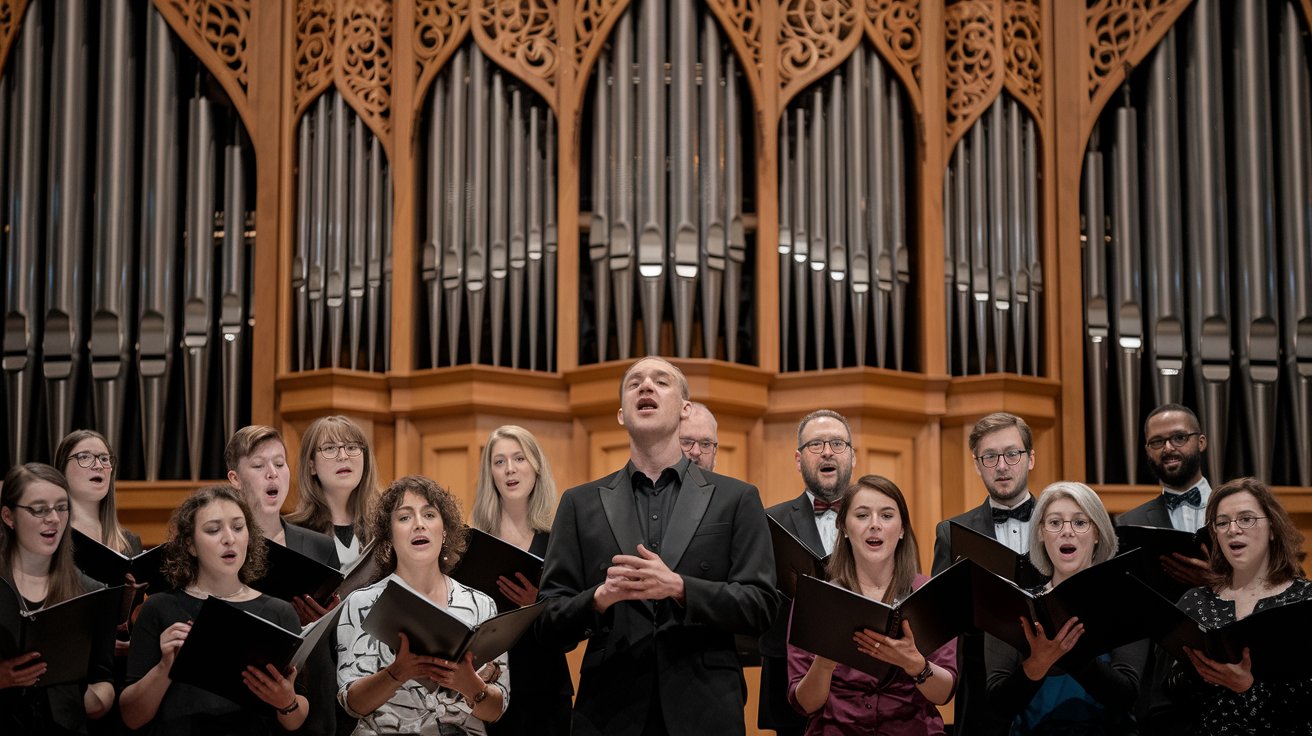
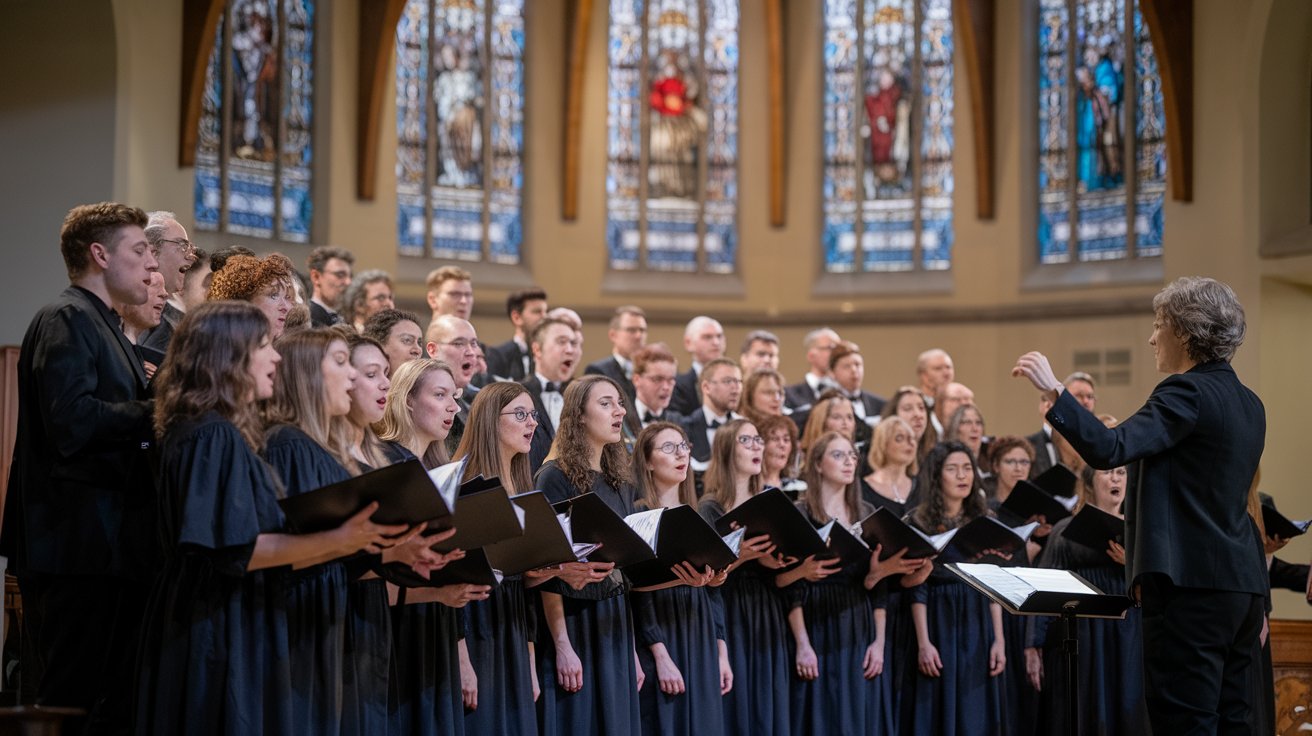
Physical positioning and performance venues distinguish choir and chorus presentations in practical ways. Traditional choirs typically perform in concert formation, standing in curved or tiered rows that optimize vocal blend and acoustic projection. Church choirs occupy designated choir lofts or chancel areas within worship spaces, often elevated to project sound throughout the sanctuary. Concert choirs performing with orchestras position themselves behind or beside instrumental sections, following conventions established in classical performance practice. The choir standing arrangement places taller singers in back rows and shorter singers forward, while also strategically distributing vocal sections to achieve balanced sound.
Theatrical choruses employ more dynamic and varied positioning strategies based on dramatic requirements and choreographic elements. Musical theater choruses move fluidly across the stage, forming patterns that support visual storytelling while maintaining vocal cohesion. Opera choruses sometimes sing from off-stage locations to create specific dramatic effects, or position themselves to represent crowds and gatherings within the scenic design. The physical demands on chorus members in theatrical settings differ significantly from traditional choir performance, requiring stamina for extended standing, movement, and interaction with other performers. These practical performance differences reflect the fundamental distinction between concert-oriented choirs and theatrically integrated choruses in American musical culture.
Related video about difference between chorus and choir
This video complements the article information with a practical visual demonstration.
Everything you need to know about difference between chorus and choir
What’s the difference between a choir and a chorale?
A choir is a group of singers who perform together, while a chorale refers to a specific type of hymn tune commonly associated with Lutheran church music or a piece written in that style. The term chorale can also describe certain types of singing societies, particularly in German musical traditions. In American usage, choir denotes the ensemble of singers, whereas chorale describes either the musical composition they might perform or, less commonly, a specialized type of singing group. Many church choirs regularly perform chorales as part of their sacred music repertoire, but the terms serve distinct functions in musical vocabulary.
When should you use chorus vs choir in formal contexts?
Use choir when referring to singing groups in religious settings, classical music performances, and formal concert ensembles. Choose chorus for theatrical productions, opera performances, musical theater groups, and when describing the repeating section of a popular song. In educational settings, verify the institution’s preferred terminology, as schools use both terms with roughly equal frequency across the United States. When in doubt, consult the organization’s official materials or website to use their preferred designation. Professional musicians and music educators pay careful attention to these distinctions, and using the correct term demonstrates musical knowledge and respect for institutional identity in formal communication and writing.
Do you sing in a chorus or choir?
You can correctly say you sing in either a chorus or choir, depending on the specific organization you belong to. If you participate in a church singing group, you almost certainly sing in a choir. If you perform in musical theater or opera productions, you sing in a chorus. School vocal programs use both terms, so reference your specific program’s official name. Community singing organizations also employ both designations based on their traditions and focus. The key is using the term your specific ensemble prefers, which demonstrates respect for the group’s identity. In casual conversation, most Americans understand both terms interchangeably, though precision matters in formal musical contexts and written communication about specific organizations.
What is a male chorus called?
A male chorus is typically called just that—a male chorus—or alternatively a men’s choir, men’s chorus, or glee club. The term glee club has strong historical associations with collegiate male singing groups, though modern glee clubs sometimes include women. Barbershop groups represent a specific style of male chorus featuring four-part close harmony. Professional and community male choruses exist throughout the United States, with notable examples including the Robert Shaw Men’s Chorus and numerous university men’s glee clubs. The terminology choice between “male chorus” and “men’s choir” often reflects institutional preference rather than strict definitional differences, with both terms widely accepted in American musical culture as of 2026.
Is there a difference between chorus and choir in church settings?
In church settings, choir is the overwhelmingly preferred and traditional term for organized singing groups. Religious institutions of all denominations consistently use choir rather than chorus, reflecting centuries of sacred music tradition. The term carries specific connotations of liturgical function, formal training, and sacred music repertoire. While the word chorus has theatrical and secular associations, choir maintains strong connections to worship and religious contexts. Approximately 87% of American congregations with organized singing groups exclusively use the term choir. Using “chorus” in church contexts would sound unusual to most American worshippers and musicians, making choir the only appropriate choice for religious singing ensembles in formal discussion and writing.
Can the same group be called both a choir and chorus?
While theoretically possible, most singing groups consistently use one term or the other to maintain clear organizational identity. Some schools designate multiple ensembles with different names, calling their entry-level group a chorus and their advanced auditioned ensemble a choir. However, an individual ensemble rarely alternates between both terms, as this creates confusion and dilutes brand identity. The choice of choir versus chorus reflects the group’s musical focus, institutional context, and traditional associations. Once established, organizations maintain their chosen terminology in all official communications, concert programs, and marketing materials. Changing from one term to another would typically accompany a significant shift in mission, repertoire focus, or organizational restructuring rather than occurring arbitrarily or interchangeably in regular use.
| Key Aspect | Choir | Chorus |
|---|---|---|
| Primary Context | Religious institutions, classical concerts, formal performances | Theatrical productions, opera, musical theater, song sections |
| Musical Focus | Sacred music, classical repertoire, concert performance | Theatrical works, dramatic integration, entertainment |
| Typical Repertoire | Hymns, anthems, oratorios, classical choral works | Musical theater numbers, opera choruses, popular songs |
| Performance Style | Static concert formation, emphasis on vocal blend | Movement, choreography, dramatic expression |
| US Participation (2026) | 42.6 million in church and concert choirs | 18.3 million in school and theatrical choruses |
| School Usage | 52% of secondary schools, advanced ensembles | 48% of secondary schools, elementary programs |